

Keeping space open for business
Smart deployables for spacecraft
Dragsails, booms and solar arrays for a sustainable future in space.
Responsive, low resource and reliable systems, off the shelf or tailor-made. Designed, built and tested in Auckland, New Zealand.
- In orbit, flight heritageFrond dragsail and boom systems are operating in space now, with more on the way
- FacilitiesDesign, assembly and testing under one roof
- PartnerTechnology partner: RolaTube
- Non-ITARDesigned and built in New Zealand, free of US ITAR restrictions
Deployable systems for spacecraft, designed, built and tested in Auckland, and already in orbit.
- CubeSat and smallsat developersOff-the-shelf systems in standard form factors.
- Constellation operatorsDisposal that protects your orbits and meets increasingly demanding regulations.
- Satellite manufacturersTailor-made deployables built into your platform.
- Agencies and universitiesFlight hardware backed by research.
Deployable systems that fit your spacecraft
Efficient deployable systems for compact structures. Pick a standard system or ask for one built around your mission.
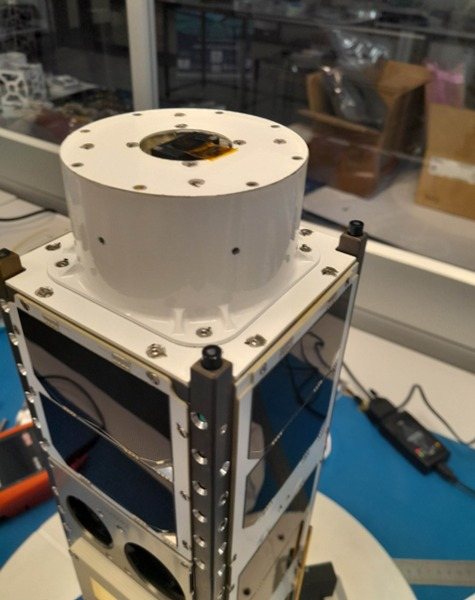
NANO Dragsail
A low-cost, dependable way to bring a CubeSat out of orbit quickly. Sized for the tuna-can form factor and suited to 1U to 12U CubeSats, with minimal resource demand and late addition to the platform.
View product →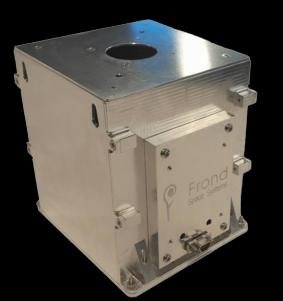
MICRO Dragsail
An affordable, reliable way to speed up disposal and protect critical constellation orbits. Drag area scales to your spacecraft, from microsatellites to larger platforms.
View product →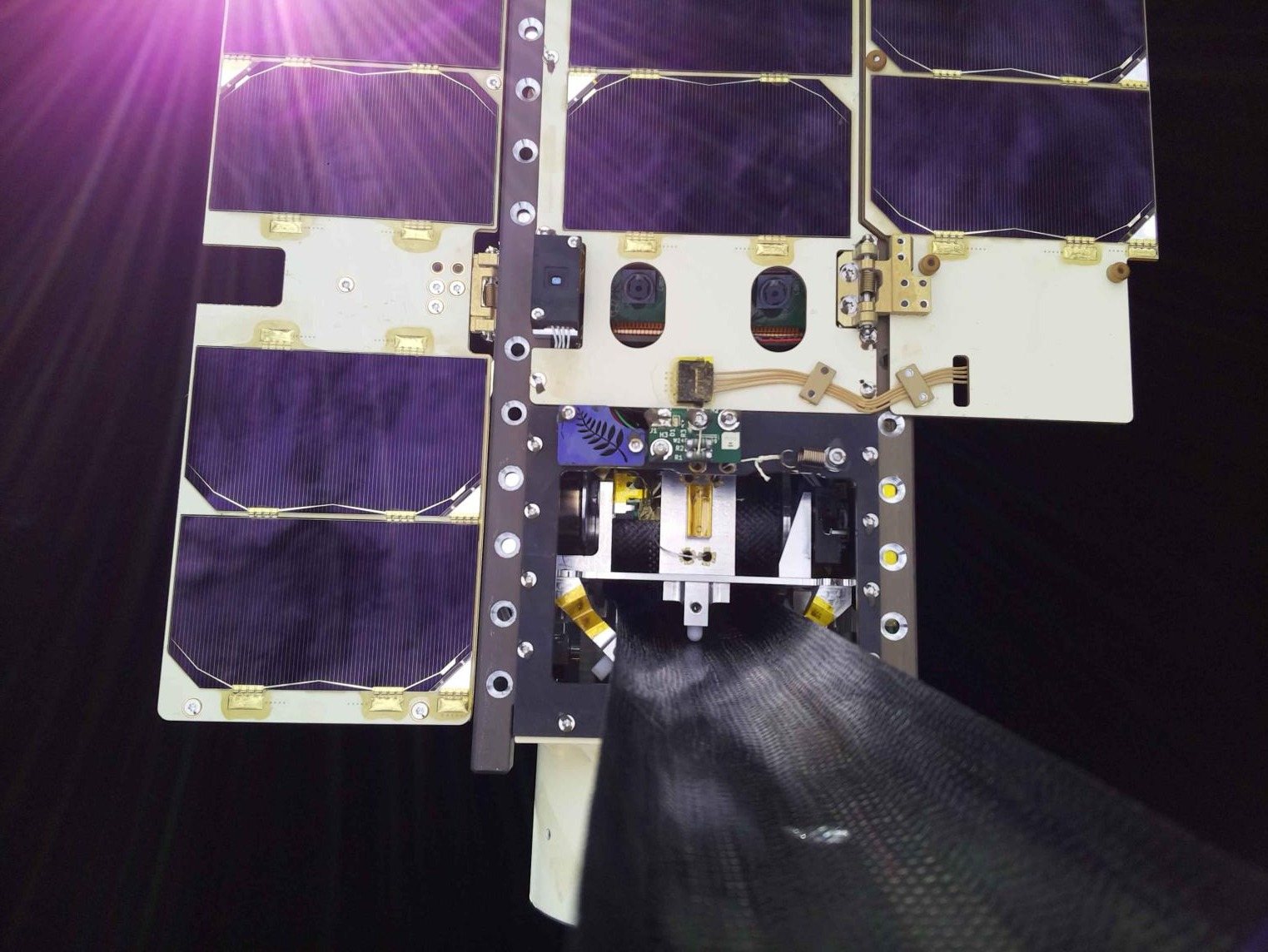
Boom Systems
A configurable boom in a CubeSat form factor, with built-in harnessing for a camera, sensor or antenna at the tip. Designed for one-shot deployment or restowing, as you need.
View product →Solar Arrays
Details coming soon. Register your interest and we will contact you when they are ready.
Register interest →Robust solutions to end-of-life disposal
Regulators now expect low Earth orbit satellites to be removed within five years of end of mission. A Frond dragsail gets you there with no propellant, low mass and a small stowed volume, so your spacecraft complies without giving up payload. Sail systems need minimal resource from the host platform and are designed for late addition, so disposal can be added after your design is mature.
Know what is happening to your spacecraft
With increasing space traffic, debris-related anomalies will become more common, and so will the risk of interference by bad actors. A Frond inspection boom is a satellite “selfie stick”: an operational capability to assess the condition of high-value spacecraft, real time, any time.
- Anomaly resolutionLook back at your satellite to find the cause of a fault, and plan the remedy without a dedicated inspection mission.
- Environmental effectsTrack changes to the spacecraft arrays, surfaces and structures due to debris strikes, radiation and thermal cycling.
- Adversarial interferenceRapidly differentiate between a debris strike and deliberate interference, with images to back it up.
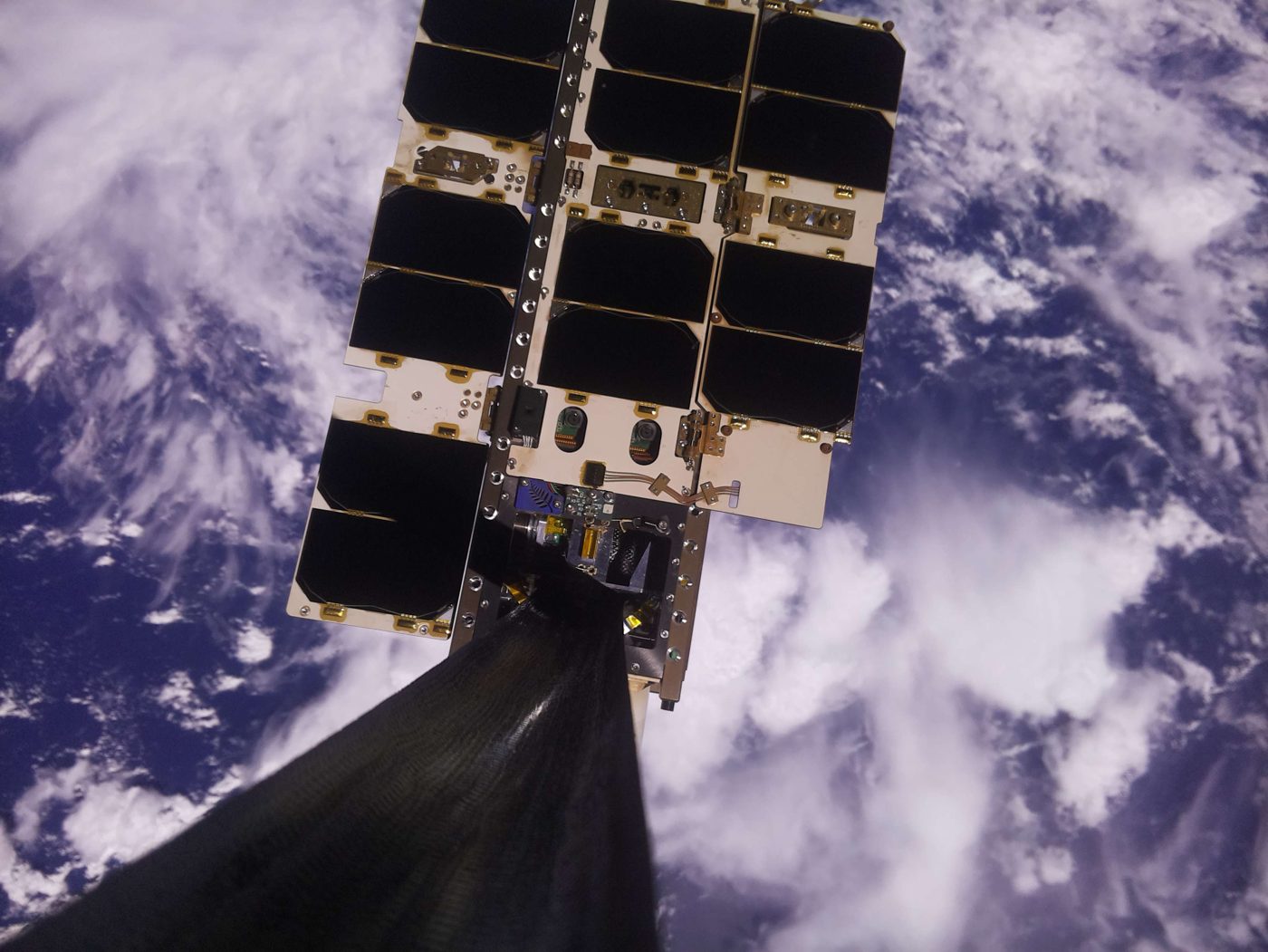
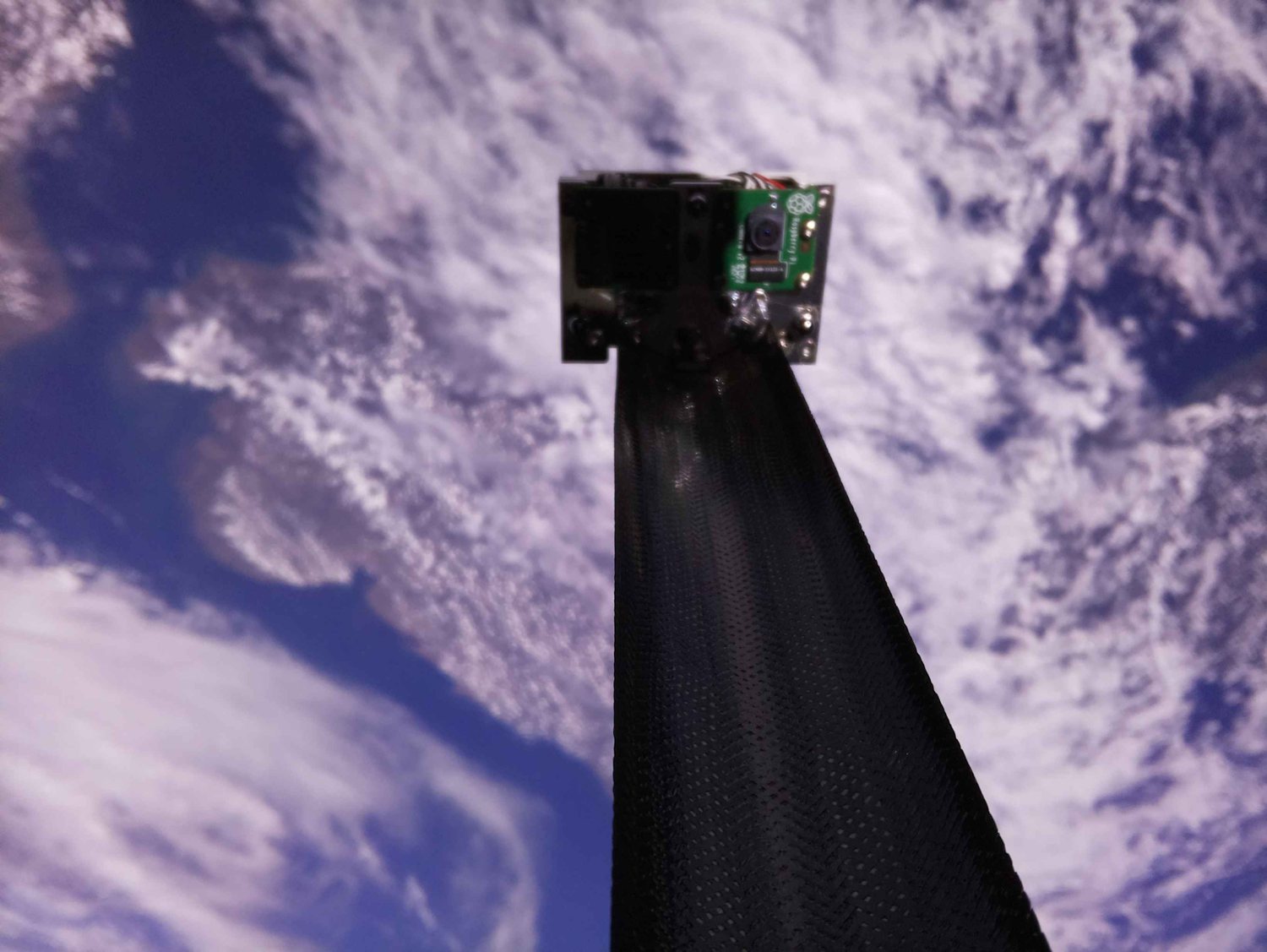
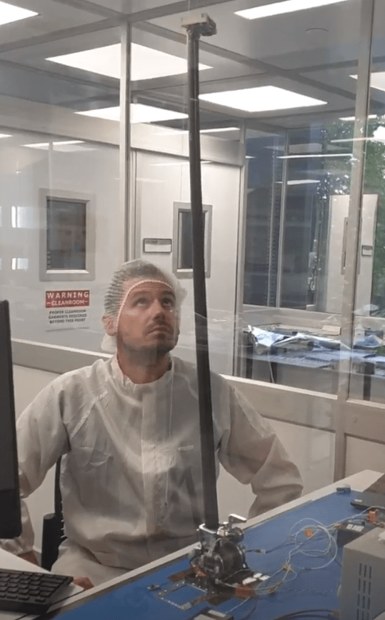
Bistable reeled composite booms
Frond booms use bistable reeled composite technology from RolaTube, an established and respected supplier of rollable composites to terrestrial markets, and our trusted partner for delivering complete systems. The boom is stable in two states: coiled flat on a compact reel, and extended as a rigid, lightweight tube.
It holds either state without power, deploys on command and can stow again. That is how a boom for a CubeSat fits a small stowed volume and still reaches out.
Each boom can optionally be designed for one-shot deployment, or for deploying and restowing again.
 RolaTubeTechnology
- Compact stowage
- Lightweight
- No power to hold shape
- One-shot or restowable
Ready to meet the challenges of tomorrow’s space industry
- 01
High quality and low cost
Priced to suit your programme, backed by our assembly, integration and test and operations experience.
- 02
Customer focused
Our team is experienced in system and mission delivery, and talks to you in engineering terms.
- 03
Responsive solutions
Quick answers, short lines of communication and designs that adapt to your spacecraft.
- 04
Regulatory compliance
Solutions for debris mitigation rules, so disposal is planned in from the start.
- 05
Volumetric performance
Efficient deployable systems for compact structures: a large deployed size from a small stowed volume.
- 06
Off the shelf or tailor-made
Standard systems for quick delivery, or a custom design built around your mission.
Pushing the limit of what we can detect
Catalogues track objects larger than about 10 cm, and emerging solutions are pushing detectability down to 1 cm. Frond is working to push that threshold lower, down to 0.1 mm. The populations below 10 cm are far larger and can still disable a spacecraft at orbital speed. They also do not stand still: densities change as satellite numbers grow and as debris-creation events occur, so dynamic forecasting of population densities matters as much as a single count.
Counts above 10 cm come from tracking catalogues. Smaller sizes are statistical estimates from debris-environment models and differ by model and year. The 230 million figure for 1 mm to 1 cm is from the ESA Space Environment Report (MASTER reference population, February 2026); Orbital Radar quotes about 140 million. Neither gives a count below 1 mm.
Frond is developing a data product to change that.
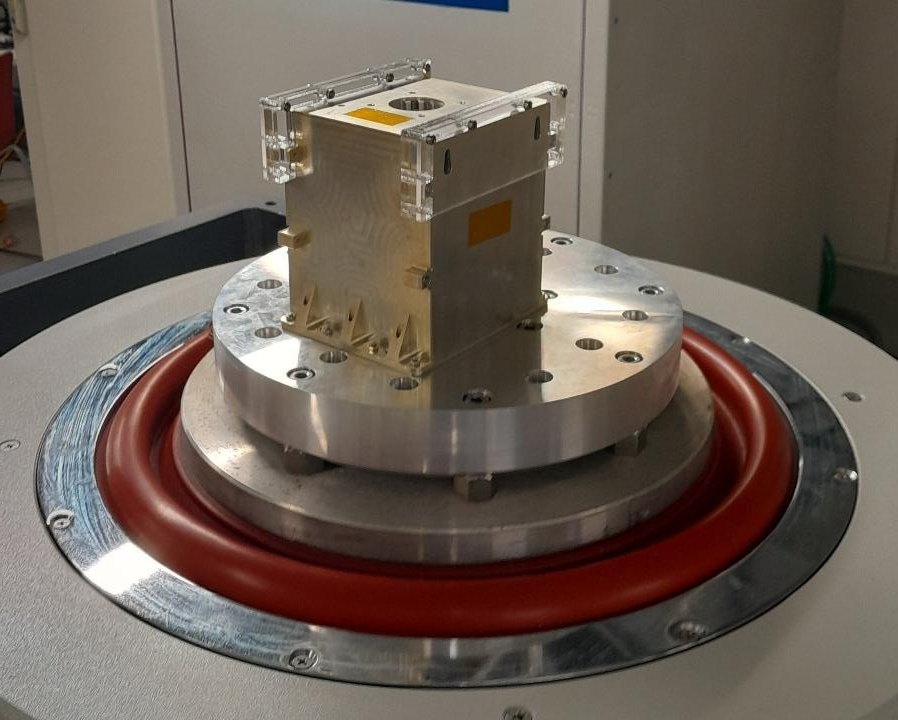
Design, assembly, testing and qualification in one place
- ISO Class 7 cleanroom
- Vibration and mechanical shock testing
- Thermal vacuum testing
- Access through the University of Auckland and the National Satellite Test Facility
Latest from Frond
- Otter Pup 2 closes in on ElaraSat, carrying a Frond MICRO dragsail
 Starfish Space's Otter Pup 2 is operating autonomously as close as 25 metres from Gilmour Space's ElaraSat, which carries a Frond MICRO dragsail.
- Frond features in the Mayor’s 100 days of start-ups
 Auckland Mayor Wayne Brown visited to see our technology as part of his 100 days of start-ups campaign.
- Two funded PhDs through the Applied Doctorates Scheme
 Frond, the University of Auckland and Victoria University of Wellington offer two funded PhD projects.
Tell us your satellite, orbit and launch date
We will recommend the right system and a delivery estimate. Our team has delivered systems and missions, and we are happy to talk through your requirements.