

Deployable systems for your spacecraft
We develop deployable spacecraft systems, including deorbiting dragsails and boom-based systems. Choose a standard system or talk to us about one built around your mission.
Effective deorbiting for Nanosatellites in LEO
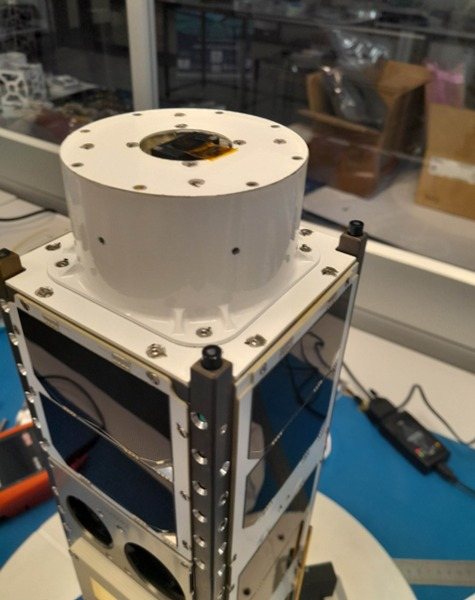
A cost-effective, reliable option for accelerated disposal of CubeSats from 1U to 12U, in a compact “tuna-can” form factor. It adds no unnecessary material, needs minimal resource from the host and is suited to late-stage integration.
- Low impact: 250 g, fits entirely within extended CubeSat volumes
- Suited to 1U–12U CubeSats and nanosatellites
- 1 m² deployed sail area
- Qualified to GEVS levels (14.1 Grms), operating from −30°C to +60°C
- Minimal interfaces required to the spacecraft
- Suited to
- 1U to 12U
- Deployed area
- 1 m²
- Mass
- 250 g
- Vibration qualification
- GEVS, 14.1 Grms
- Operating temperature
- −30°C to +60°C
- Deployed area
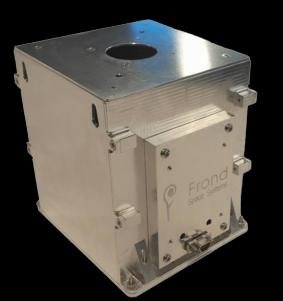
- 10 m² baseline, scalable
- Mass
- Under 2 kg
- Suited to
- 50–200 kg satellites, scalable to larger platforms
- Operating temperature
- −30°C to +60°C
Scalable drag area for your mission
A cost-effective, reliable option for accelerated disposal that protects critical constellation orbits. Drag area scales to your spacecraft, from microsatellites in LEO to larger platforms, and the system is configurable to your mission.
- Configurable: low mass, with options for power line activation, an internal watchdog, self-contained batteries and independent RF access
- Scalable drag area: 10 m² baseline, sized to your mission
- Optimised for 50–200 kg satellites in LEO, scaling to larger platforms, with no unnecessary mass or mission complexity
- Qualified to GEVS levels, with minimal spacecraft interfaces
Versatile boom technology for a range of applications
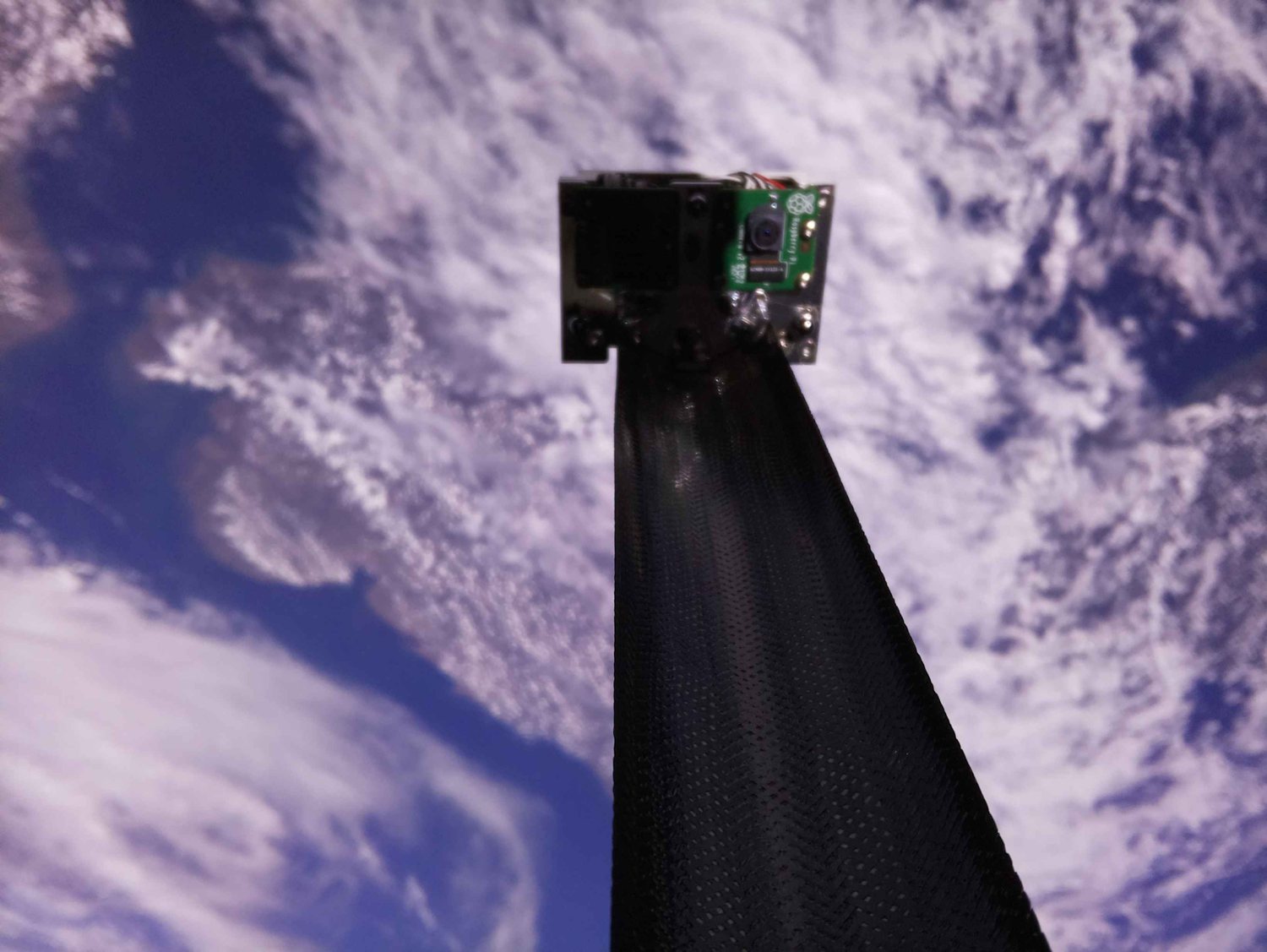
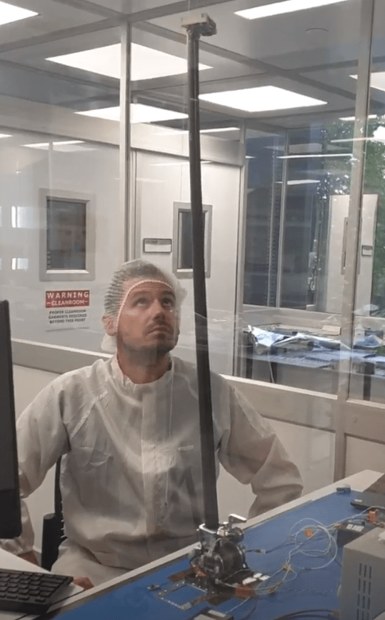
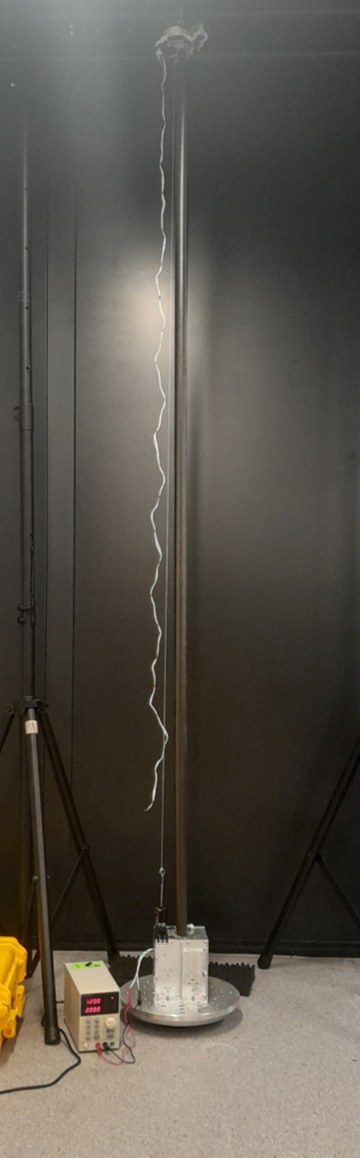
A configurable, CubeSat-format design with embedded harnessing to support boom-tip payloads. Our inspection boom, a satellite “selfie stick”, captures stereoscopic images of the host spacecraft and can retract automatically if the spacecraft has an anomaly.
Booms can be designed for one-shot deployment or for repeated deploy and restow. We work with RolaTube Technology Limited, an established supplier of rollable composites, to deliver complete systems.
- Up to 3 m deployable, and scalable beyond that to meet your requirements
- Qualified to GEVS levels (14.1 Grms), operating from −30°C to +60°C
- Deployment modes: one-shot spring-driven, motor-driven deploy and stow, or deploy and stow with auto-retraction during anomalies
- Boom-tip payloads: twelve wires embedded in the carbon fibre boom by default for power and data; we can support your payload, develop one in-house or work with partners
Configuration options
- Hold down releaseOne circuit included by default. Burn-wire and low-profile, shockless shape memory alloy options available.
- Precision positioningCoarse home and end-point position switches, plus encoder positioning with 2 mm accuracy.
- Boom lengthStandard booms deploy up to 3 m, and the design scales beyond that to meet customer requirements.
- MountingDesigned for CubeSat interfaces, with a range of mounting and enclosure options.
Restowable high-power arrays
Built on our boom technology. Details coming soon. Tell us what your platform needs and we will keep you updated.
Why a dragsail?
Why deorbit satellites after their missions?
US FCC policy now requires satellites licensed or launched from the US to deorbit within 5 years of end of mission. Prompt disposal also keeps valuable orbits usable.
Why use a dragsail instead of propulsion?
A dragsail still works after power or attitude control anomalies that could disable a propulsion-based deorbit, and it costs significantly less.
Does a larger area increase collision risk?
For a static object population, collision probability is roughly the same with or without a sail. As the orbital population grows, deorbiting sooner matters more, and thin-film sail material causes less damage and debris in a collision.
How long does deorbiting take?
It depends on your orbit, spacecraft mass and the solar cycle. We offer a free, non-binding pre-purchase assessment for your mission.
Can the satellite keep attitude control with a deployed sail?
Our design calculations assume random tumbling, so compliance holds in the worst case. Any aerodynamic stabilisation or attitude control is a bonus.
Tell us your satellite, orbit and launch date
We will recommend the right system and a delivery estimate, including a free, non-binding deorbit assessment.